
Skip to content

Discover our 50% Clearance Sale!

Discover our 50% Clearance Sale!

Learning About Jasper

We love Semi Precious beads, we find it so fascinating how each bead is unique, the colours, characteristics and history.
Would you like to learn more about Jasper? Thank you Yvonne for sharing her knowledge about this beautiful gemstone....
Do you know...

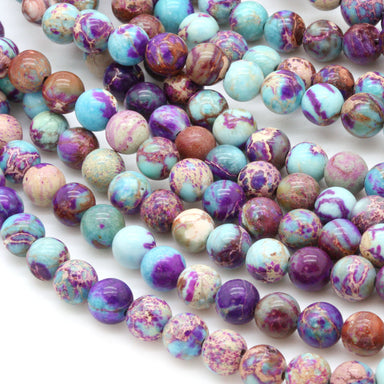
Jasper is a microcrystalline variety of the mineral chalcedony, which itself is a form of quartz. Known for its rich and diverse colours and patterns which are caused by impurities that are trapped during its formation. The stone is widely prized for use in jewellery and decorative arts and has been used as a carving material for thousands of years.

The stone's name is derived from the Greek word "iaspis" meaning spotted stone referring to its beautiful speckled colours often found. Greek, Hebrew, Assyrian and Latin literature all make references to jasper and it is even mentioned in the Bible as one of the 12 stones in the breastplate of the High Priest where it is thought that Iaspis is the 3rd stone in the fourth row. Revered across many cultures for its protective and healing properties. In Ancient Egypt, Jasper was used for amulets and people were often buried with jasper to ease their journey to the next life. It was used in many rituals by Native Americans as they believed that it provided a connection between the physical and spiritual worlds.

Formed from the gathering of silica rich sediments and volcanic ash, the minerals harden and crystallize over time. The rich and diverse colours and patterns are caused by impurities that are trapped during its formation which also causes the stone to be opaque. The natural motion of forces, such as wind and water, shift these minerals during the cystallizing process forming the stunning patterns found in jasper.

The presence of iron oxides, often from hematite, turns jasper into a gorgeous red colour. Clay minerals are responsible for the yellow, whites and greys, while goethite adds yellows and browns. Blue is the rarest natural colour and normally indicates the presence of azurite. Lastly green jasper will be the result of chlorite.

Can be found all over the world with particularly rich deposits in Brazil, India, Madagascar, Russia and the United States.
Jasper is considered a grounding, nurturing and protection stone, acting as a stone of strength, courage and balance. It is believed that jasper can balance spiritual energy and absorb negative energy thereby protecting the wearer. A favourite of artists and creatives as it is believed to stimulate creativity. Jasper is a popular choice for various types of jewellery, with a Mohs hardness of around 6.5 to 7 this makes it resistant to scratching, making it suitable for everyday wear. Beyond jewellery, jasper is crafted into decorative items like bookends, coasters, and ornamental objects. Palm stones of jasper are a beautiful way to showcase the stunning patterns within the stone. More traditional carvings are used as talismans in temples and spiritual centres.

Different Types of Jasper

Leopardskin Jasper: Named so because of its patterns that closely resemble leopard spots. Actually a variety of rhyolite rather than a true jasper.

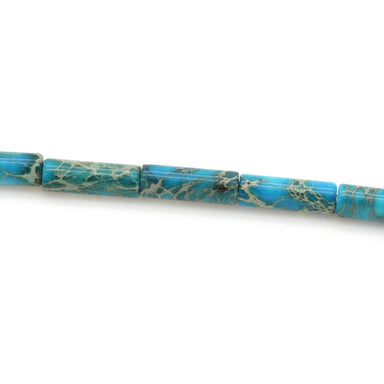
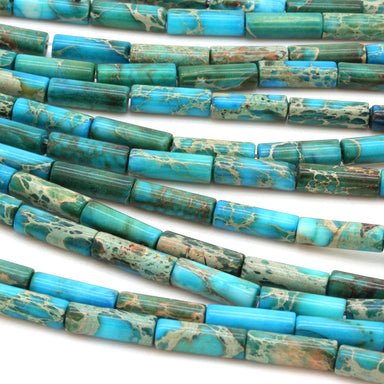
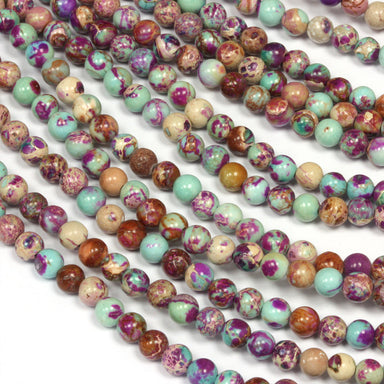
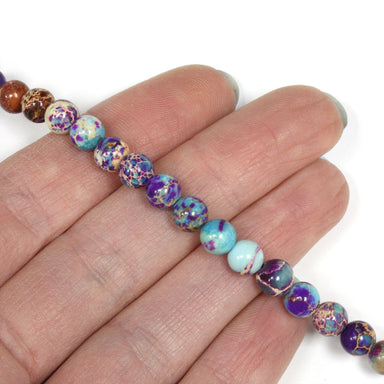
Imperial Jasper: Also called empire jasper and is considered one of the finer forms of jasper.

Picasso Jasper: A beautiful form with abstract linear patterns that look like brushstrokes which lead to its name. Actually a metamorphic limestone.

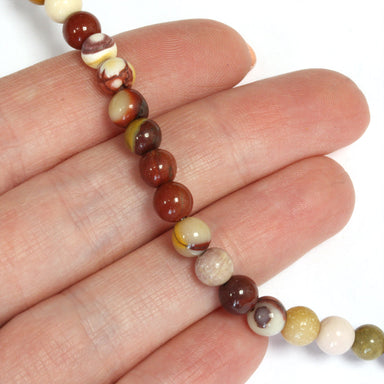
Mookaite: A polychromatic jasper found only in Mooka Creek in Australia. A bold and beautiful stone in rich colours.

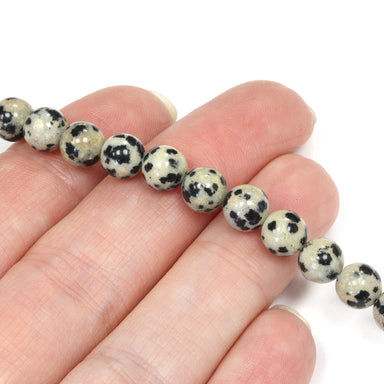
Dalmatian Jasper: Named after the beautiful dalmatian dog breed due to its speckled appearance. Is actually an igneous rock.

How To Care For Your Jasper

To care for your jasper, it is best to use warm soapy water and a soft brush. Do not use chemicals or place in an ultrasonic cleaner as this may damage the stone. Store them away from other stones which may scratch or damage your piece.