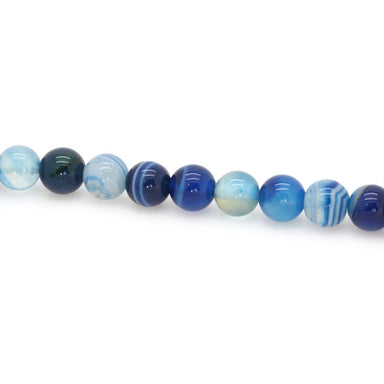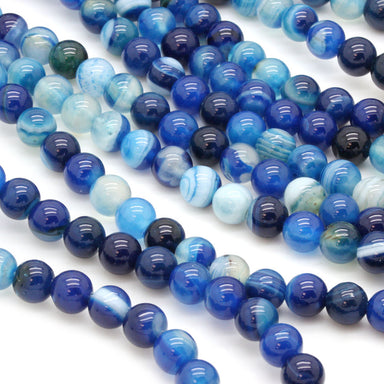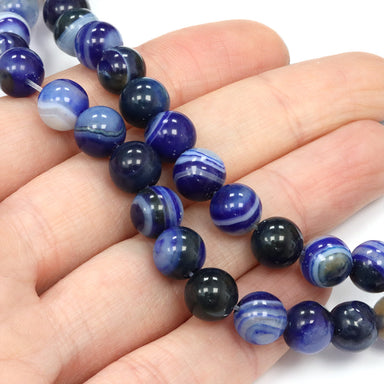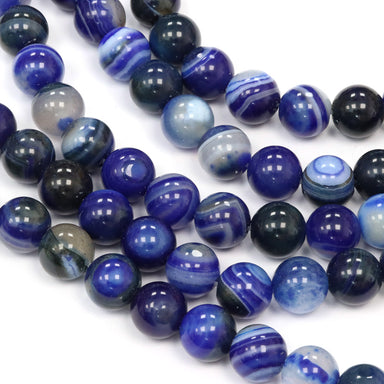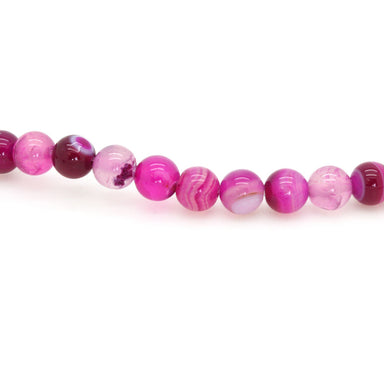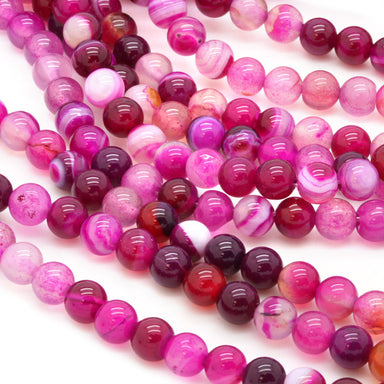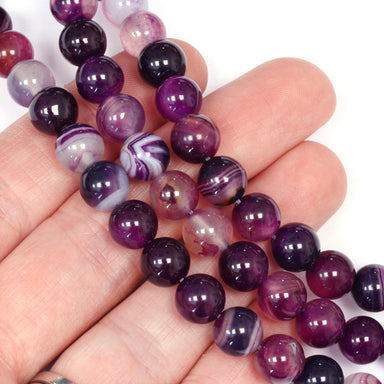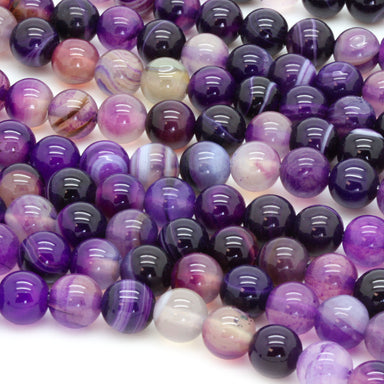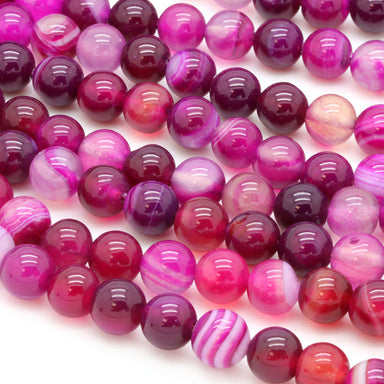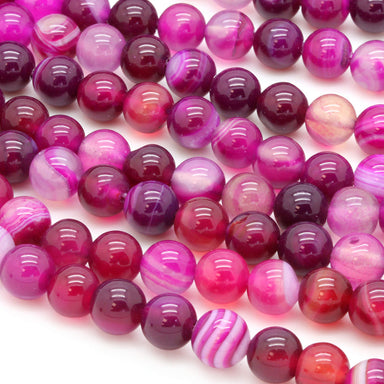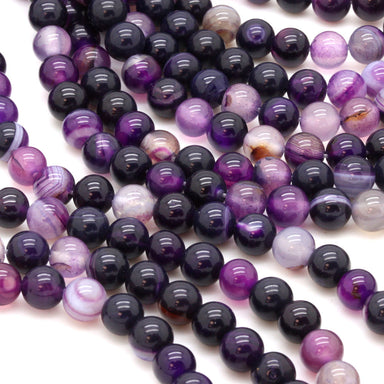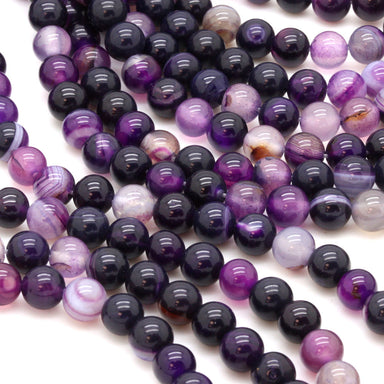

As ancient lava cooled, small bubbles from steam and other gases formed creating cavities within these igneous rocks. Over time silica rich ground waters fill these cavities and solidify. The distinctive bands of agate are formed as different impurities are carried by the water, often incorporating traces of iron, manganese, or other minerals. When the deposits are formed around the cavity walls the layers form concentric circles, when formed from the bottom up, it creates horizontal banding. Some cavities are lined with crystals forming stunning geodes.
Agate is considered a grounding stone that brings emotional, physical, and intellectual balance. It is said to harmonize positive and negative energies, alleviate stress, and foster courage. Different types of agate are believed to have specific healing properties, such as promoting strength and protection or enhancing mental function and clarity. Agate is a popular choice for various types of jewellery, with a Mohs hardness of around 6.5 to 7 this makes it resistant to scratching, making it suitable for everyday wear. Most natural agate is a quite unimpressive colour, but as a porous material, agate takes up dye well which means a wide variety of gorgeous colours are available for jewellery making. Beyond jewellery, agate is crafted into decorative items like bookends, coasters, and ornamental objects. Slices of agate are often polished to reveal their internal beauty and used as decorative displays.
How To Care For Your Agate
To care for your agate, it is best to use warm soapy water and a soft brush. Do not use chemicals or place in an ultrasonic cleaner as this may damage the stone.